• Superbugs Are the Final Boss Nobody’s Ready For

    If you’ve played enough video games, you know the worst boss is the one that adapts. You hit it with the same move twice and suddenly it’s immune. That’s basically antibiotic resistance, and it’s one of the biggest threats in global health right now.

    Antibiotics are the meds that kill bacteria. But the more we use and misuse them, the more bacteria evolve to survive them. The CDC says antibiotic-resistant infections killed at least 1.27 million people worldwide in 2019. And a major study in The Lancet projected that these “superbugs” could be linked to around 39 million deaths between now and 2050 if we don’t change.

    What makes it scary is that these are infections we used to beat easily. A cut, a UTI, pneumonia. If the antibiotics stop working, simple stuff gets dangerous again.

    The boss-fight move here is honestly boring: don’t beg for antibiotics when you have a regular cold (they don’t even work on viruses), finish your prescription when a doctor gives you one, and get your vaccines so you don’t get the infection in the first place. Spamming the same attack just trains the boss to beat you.

    Bottom line: Use antibiotics carefully now, or we lose the cheat code that beats deadly infections.

    Read more: Drug-resistant superbugs and the 39 million figure — Gavi / The Lancet

  • The World Cup Is About to Test Our Health System

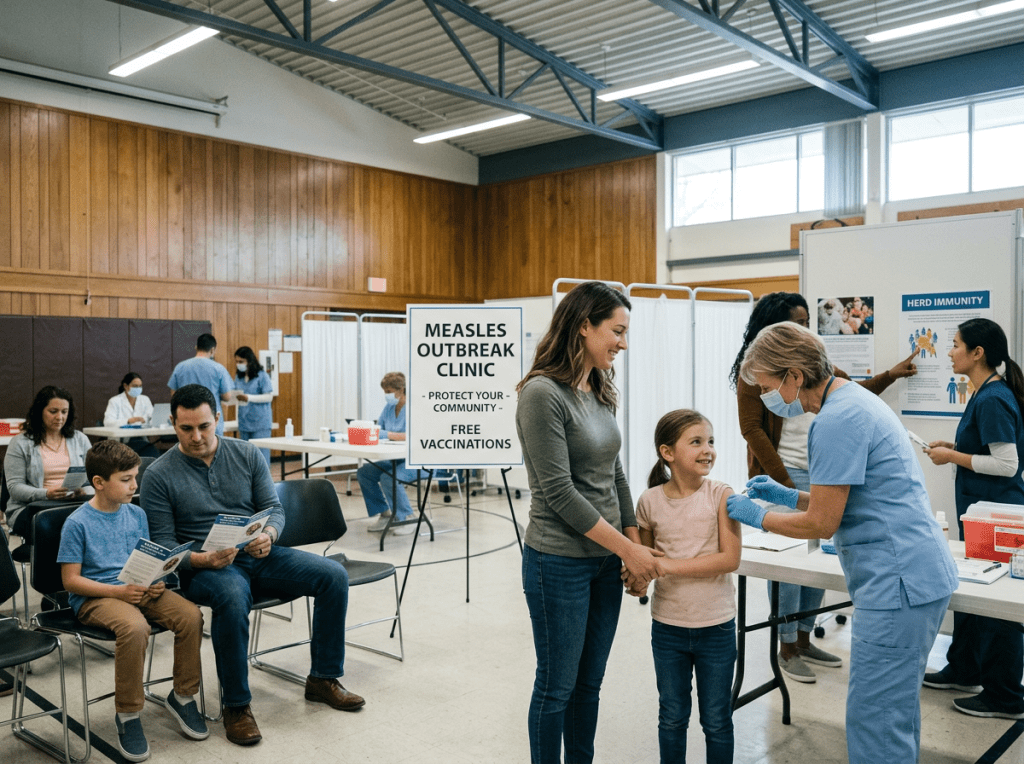
    The 2026 FIFA World Cup is only a few weeks away, and millions of people are going to be coming to North America to watch it. But that’s a lot of people in one place, which means health officials have a lot to worry about. Normally they have a plan for big events like this, but this year there’s a bunch of extra events going on. There’s an Ebola outbreak in the Democratic Republic of Congo and Uganda that the WHO called an emergency, plus a rare hantavirus outbreak and measles cases going up. On top of that, the US isn’t part of the World Health Organization anymore, which makes things more complicated. This CNN article talks about how officials are getting ready for all of it, the problems with running an event across three different countries, and the money issues that host cities are still dealing with. Here’s what I thought was interesting.

    This year’s World Cup is testing the public health playbook | CNN

  • On Health & Healing | Shivonne Laird, Ph.D, System Director, Community Health, Bon Secours Mercy Health

    Name: Shivonne Laird, Ph.D.

    Title: System Director, Community Health Impact for Bon Secours Mercy Health

    Dr. Shivonne L. Laird, serves as System Director, Community Health Impact for Bon Secours Mercy Health (BSMH) – Dr. Laird’s service to the BSMH team includes system-wide coordination of: community benefit processes/review/analysis; understanding local community initiatives; creation of metrics/outcomes; and research-related activities for community health. Dr. Laird also serves as a subject matter expert on health equity, health disparity reduction, and social drivers of health (SDoH) across BSMH teams. Prior to joining BSMH, Dr. Laird served as a Program Officer for the Eugene Washington PCORI Engagement Awards at the Patient-Centered Outcomes Research Institute (PCORI), responsible for strategic decision-making and high-level management and monitoring of the program, its funded projects, and program activities that advanced PCORI’s Engagement mission. She has also served as a senior advisor in the Office of Legislation of the Health Resources and Services Administration (HRSA). As a liaison between HRSA and members of Congress and their staff, her work included advising office, agency, and department senior leadership on legislative analysis, policy, and programmatic activities. She has worked in academic settings, conducting qualitative and quantitative research related to disparities in health and healthcare, presenting results to bothtechnical and non-technical audiences. Dr. Laird received a Bachelor of Arts in biological sciences from the University of Maryland-Baltimore County. She earned an Masters in Public Health (MPH) in international health policy and management from Tulane University School of Public Health and Tropical Medicine. Dr. Laird has also earned a PhD in health behavior and society, focused on health communication, from the Johns Hopkins Bloomberg School of Public Health.

    1. Do you believe Medicine alone can solve health problems?

    No, I don’t think Medicine alone can solve problems.  In public health, we would call clinical treatment a “downstream” solution to a health problem.  This term is often connected to a famous quote, attributed to Desmond Tutu:

    “ There comes a point where we need to stop just pulling people out of the river. We need to go upstream and find out why they’re falling in”

    Public health is about going “upstream” and understanding why people are falling into the river in the first place and preventing that from happening. 

    Most recently, there is a push to focus on “social determinants” (or “social drivers”) of health for solutions.  This concept examines things like why similar people who live in different zip codes even 5 miles apart can have an expected lifespan that is 20 years different — one can be expected to live 20 years longer than the other just because of where they live. Medicine has a limited ability to affect factors like this. 

    2. What would a truly healthy society look like?

    In a truly healthy society, everyone would have the ability to live the longest and most healthy life that their genetics allows. In a healthy society there are no preventable barriers to good health. 

    3. What is one health problem people misunderstand?

    Mental/behavioral health problems are often very misunderstood.  Everything from addiction to ADHD to depression.  Others often think that people with these conditions are weak or lazy or lack the discipline to behave differently. In some cultures, prayer is the only recommended “treatment.”  They don’t understand that there are biological reasons for some of these mental health conditions, that they may require therapy and/or medication. 

    4. What should young people learn about public health?

    Young people should learn that health is more than medical treatment, and that they can be public health practitioners no matter their age.  Volunteering at food pantries to make sure everyone has access to healthy meals (“food insecurity”).  Volunteering to taxi peers home, no questions asked, should they get drunk at a party – Students Against Drunk Driving did this when I was younger (“violence prevention”). Planting or maintaining community gardens or green spaces (“environmental health;” “food insecurity”).  Even babysitting can allow a parent to go seek healthcare after work or attend a health education session (“access to care”). Look around your community, talk to people about what they need, and think about ways that you and your friends can help. 

    5. What made you interested in healthcare?

    I have wanted to be in healthcare for as long as I can remember – even as a small child, taking blood pressure of my dolls and listening to them with a stethoscope. I grew up surrounded by healthcare professionals, mostly nurses, who had dedicated their lives to helping people. My mother, specifically, is a nurse who always practiced in areas where people needed the most help to be healthy, usually poorer areas of town.  It was a calling for her, and she taught me that helping the vulnerable is what we are all supposed to do. It is now a calling for me, too. 

  • Why I Like Public Health

    I like learning about public health because it connects to real people and real life, not just science. At first I didn’t really understand what public health meant. I thought it was just about doctors and hospitals. But over time I started to see that it’s about how people live, what they eat, where they grow up, and what resources they have. It’s way bigger than just medicine.

    One of the main reasons I like public health is because I’ve been able to travel and see different parts of the world. I’ve been to places like Jamaica, the Dominican Republic, and Costa Rica. Going to those countries made me realize how different daily life can be depending on where you live. In some places, people don’t always have access to clean water, healthcare, or healthy food. That really made me think about how those things affect people’s health without them even realizing it.

    For example, when people don’t have clean water or good sanitation, they’re more likely to get sick. I learned that just from seeing how important basic resources are in other countries. Public health isn’t only about treating sickness, it’s also about preventing it. Things like housing, education, and your environment all play a role in your health, not just doctors and medicine.

    Traveling also helped me understand how culture affects health. In different countries, people have different beliefs about what it means to be healthy. Some people rely more on family or traditional practices instead of going to a hospital. Culture really shapes how people think about being sick and what they do about it.

    Another reason I got into public health is because of conversations with my mom. She’s talked to me about how people grow up in Brazil and how different their experiences can be compared to mine. Hearing those stories made me realize that where you grow up can really affect your health. Things like education, income, and community matter a lot more than I used to think.

    I also like that public health connects to a lot of different topics like science, culture, and even economics. It makes me think about the world in a different way. Instead of focusing on just one person, public health looks at whole groups of people and tries to improve their overall health. It makes me feel like the work people do in this field can actually make a real difference.

    I’m still learning a lot about public health and I don’t understand everything yet. But I think that’s part of why I like it. There’s always more to learn and it connects to real problems that people deal with everyday. Seeing how different countries handle health challenges made me more interested in figuring out how to help improve those situations.

    Overall, public health is interesting to me because it’s not just about science. It’s about people, their lives, and their environments. Traveling and hearing different perspectives helped me see that health isn’t the same for everyone, and that’s something I want to keep learning about.

  • Life and Health Care Barriers for Indigenous People in Montana

    This really interesting article talks about how many Native American people in Montana struggle to get the care they need. It focuses on people who live in rural and tribal areas where hospitals and doctors are far away and hard to reach. The story explains that problems like long travel distances, lack of money and not enough medical services make it harder for these communities to stay healthy. It also shows how these challenges can lead to worse health outcomes and shorter life expectancy for Indigenous people in Montana, and why this is an ongoing issue that needs more attention.

    https://centerforhealthjournalism.org/our-work/reporting/people-die-native-americans-face-serious-barriers-accessing-care

  • Why Pancreatic Cancer Is So Hard to Catch

    This is the one that started everything for me. My grandmother died from pancreatic cancer, and for a long time I thought of it as just terrible luck. The more I’ve learned, the more I see it as a public health story too.

    Pancreatic cancer is one of the deadliest cancers, and a big reason is timing. There’s no routine screening for it, and it usually doesn’t cause obvious symptoms until it’s already advanced. Over 80% of cases are found late, and the 5-year survival rate is only around 13%. By the time you know, you’re already in the hardest fight.

    The American Cancer Society lists the main risk factors, and this is the part that really got me. Smoking roughly doubles the risk and is behind about 25% of cases. Obesity raises the risk by around 20%. And diabetes is linked to it too. My grandmother dealt with all three. She smoked, and she also lived with obesity and diabetes. Seeing how those stacked up is a huge part of why I think about prevention constantly.

    I want to be clear: I’m not blaming her. Addiction is real, and obesity and diabetes are genuinely hard to fight. If anything, it makes me want to focus on the systems and habits that come way before a diagnosis, so fewer families end up where mine did.

    (This post deals with cancer and losing my grandmother, which are heavy things to write about.)

    Bottom line: Pancreatic cancer is brutal partly because we catch it late, which is exactly why prevention matters so much.

    Read more: Pancreatic cancer risk factors — American Cancer Society

  • Can Making Beats Actually Be Good for Your Health?

    This is hands down my favorite post to write, because music is my thing. I make rap beats in FL Studio and post them online, so I wanted to know if all those hours are doing anything good for me besides being fun.

    According to Johns Hopkins, listening to and making music can lower anxiety, blood pressure, and cortisol (that stress hormone again), while boosting mood, memory, and even workout performance. Here’s the wild part: Johns Hopkins researchers put jazz musicians and rappers inside brain scanners and watched music light up basically the entire brain. It’s like a full-body workout, but for your mind.

    That explains a lot for me. When I’m producing late at night, or when I throw on a playlist before a track meet, it’s not just vibes. There’s real science behind why it calms me down and locks me in.

    The best part is music is free and it’s everywhere. In a world where mental health is a serious public health issue, having a tool like this in your pocket is underrated. Make it, listen to it, go to shows. It’s actually good for you.

    Bottom line: Music is a free, legit mental-health tool, and the science backs it up.

    Read more: 4 ways music can benefit your health — Johns Hopkins

  • On Health & Healing | Akil McClay, VP of Population Health, INTEGRIS Health

    Name: Akil McClay

    Title: Vice President of Population Health for INTEGRIS Health

    Akil McClay is a transformational healthcare executive with more than 15 years of experience advancing value‑based care, operational performance, and enterprise growth across major U.S. health systems. He currently serves as the Vice President of Population Health at INTEGRIS Health, where he leads systemwide revenue strategy, payer partnerships, and value‑based care operations for a $3B health system spanning 16 hospitals. His leadership has driven significant financial turnarounds, multi‑state ACO expansion, and major improvements in quality, risk adjustment, and provider engagement.

    Before joining INTEGRIS Health, McClay served as Chief Operating Officer of Population Health for Bon Secours Mercy Health, overseeing four clinically integrated networks and two Medicare Shared Savings Program ACOs across four states. Under his leadership, the organization achieved record-breaking financial performance, including multiple top‑10 national MSSP rankings and more than $150M in shared savings across four years.

    McClay’s earlier roles include serving as Director of Alternative Payment Model Operations at Trinity Health, where he directed value‑based operations across 17 CINs in 22 states, generating nearly $300M in shared‑savings revenue; and multiple leadership roles at SSM Health, where he drove systemwide population health initiatives, payer contracting strategies, and care transformation projects.

    Throughout his career, McClay has been recognized for building high‑performing teams, scaling innovative value‑based care models, and creating sustainable financial and operational frameworks for health systems managing millions of attributed lives. He holds aMaster of Healthcare Administration from the University of Missouri, aMaster of Neuroscience from Tulane University, and aBachelor of Psychology from Southern University.

    Q: Do you believe culture changes the way doctors practice medicine?

      Absolutely. Culture shapes how people view health, illness, treatment, and even the healthcare system itself. As a result, physicians inevitably practice medicine through the lens of their own cultural background—and through the cultural expectations of the communities they serve.

      In my work in population health, I see how cultural beliefs influence communication styles, patient trust, treatment adherence, and decision‑making. When doctors are culturally aware, they build stronger relationships and deliver more personalized, effective care.

      Q; When you hear the term “public health”, what does it mean to you?

      To me, public health means creating the conditions for every person to live the healthiest life possible. It’s about looking beyond the walls of the clinic and understanding the broader forces that shape well‑being—housing, food access, education, environment, policy, and community support.

      Public health is proactive. It’s about prevention, equity, and systems change, not just treating illness after it appears. As someone working in population health, I see it as the bridge between healthcare delivery and community reality.

      Q: What skills do healthcare leaders need to help improve public health?

        Healthcare leaders today need a blend of strategic, analytical, and human‑centered skills. Some of the most important include:

        • Systems thinking: The ability to understand how policy, care delivery, social services, and community dynamics interconnect.
        • Cultural humility: Recognizing that diverse communities have diverse needs and values.
        • Data literacy: Using data to identify disparities, guide decisions, and measure impact.
        • Collaboration: Working across sectors—education, housing, government, nonprofits—to achieve community‑level change.
        • Communication: Explaining complex issues clearly, empathetically, and persuasively.
        • Leadership: In public health, it means balancing compassion with strategic execution.

        Q: What should young people learn about public health?

          I think young people should understand that public health is everywhere. It’s the clean water they drink, the air they breathe, the food safety standards they rely on, and the policies that shape community well‑being.

          They should learn that:

          • Health isn’t just about biology, it’s shaped by where you live, learn, work, and play.
          • Public health is deeply tied to fairness and equity.
          • Careers in public health are diverse and meaningful, ranging from epidemiology to community advocacy to health policy.

          Most importantly, young people should realize they have power—public health improves when communities get involved and speak up.

          Q: What advice would you give students who are interested in healthcare or public health?

            I would tell them to stay curious and stay connected to their “why.” Healthcare and public health can be complex fields, but they’re also deeply rewarding.

            • Explore broadly: Try different roles—clinical, community‑based, research, policy—to see what resonates.
            • Listen to communities: Real understanding comes from hearing people’s stories and experiences.
            • Build strong communication skills: No matter what your role, you will need to explain ideas, influence decisions, and collaborate.
            • Embrace data: It’s a powerful tool for improving care and reducing disparities.
            • Lead with empathy: Technical skills matter, but compassion is what truly transforms health.

          1. Car Crashes Are the #1 Thing That Kills Teenagers

            This statistic genuinely stopped me. According to the WHO, road crashes are the leading cause of death for everyone aged 5 to 29 worldwide. Not disease. Not anything else. Crashes. About 1.19 million people die on the roads every year.

            We usually call these “accidents,” but public health people look at them differently. A lot of them are predictable and preventable: seatbelts, speed limits, not texting, not driving tired or impaired, safer road design. When you treat it like a system instead of just bad luck, you can actually lower the numbers.

            The reason this matters for people my age specifically is that a lot of us are getting our licenses right now. And remember my sleep post? Driving tired is a real factor, and teens are some of the most sleep-deprived people out there. So two of my blog topics literally crash into each other here (sorry).

            The fixes are small and kind of boring: buckle up every single time, put the phone away, don’t drive exhausted. Boring habits, but they save more young lives than almost anything else in this whole blog.

            Bottom line: The number one killer of people our age is preventable with seatbelts, no phones, and not driving tired.

            Read more: Road traffic injuries — World Health Organization

          2. The Air We Breathe Is a Public Health Issue Too

            As an exercise enthusiast, I think about breathing more than most people. So air quality is something I notice. And the global picture is honestly rough.

            The WHO says about 99% of people on Earth breathe air that’s dirtier than the safe guideline limit. Ninety-nine percent. Air pollution is tied to roughly 7 million deaths a year, and the recent State of Global Air 2025 report put the number near 7.9 million in 2023, which makes it one of the leading environmental risk factors for death on the planet. It feeds heart disease, stroke, and asthma.

            What makes air pollution sneaky is that it’s invisible. You can’t see most of it, so it’s easy to forget it’s there. But when air quality is bad, training outside actually irritates your lungs, and runners definitely feel it.

            It’s also a fairness issue. The people breathing the worst air are usually the ones with the least power to change it. Cleaner air isn’t just an environment thing, it’s a health thing, and it affects everyone who breathes, which is, you know, all of us.

            Bottom line: Clean air is health care, even though no doctor is involved.

            Read more: Air pollution — World Health Organization