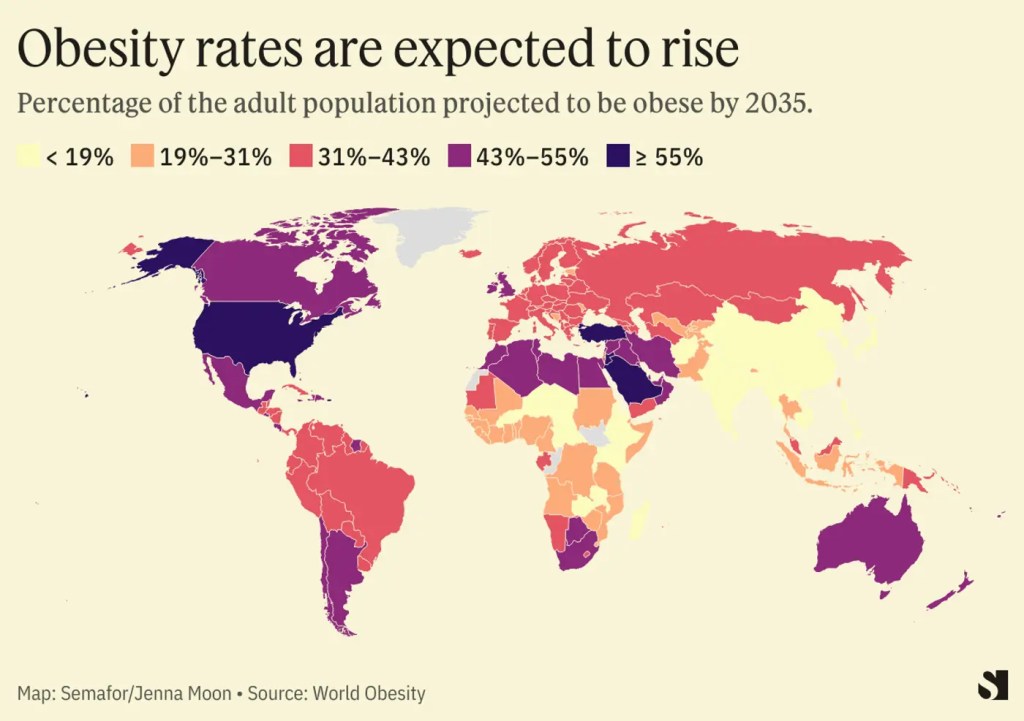
Obesity is a growing health issue around the world, but it does not affect every country in the same way. Obesity is usually defined as having a body mass index (BMI) of 30 or higher, and it increases the risk of diseases like diabetes, heart disease, and stroke.
Globally, obesity rates have risen quickly over the past few decades. The World Health Organization reports that worldwide adult obesity has more than doubled since 1990, and today over one billion people live with obesity. However, where people live makes a big difference. Some countries have very high obesity rates, while others have much lower ones.
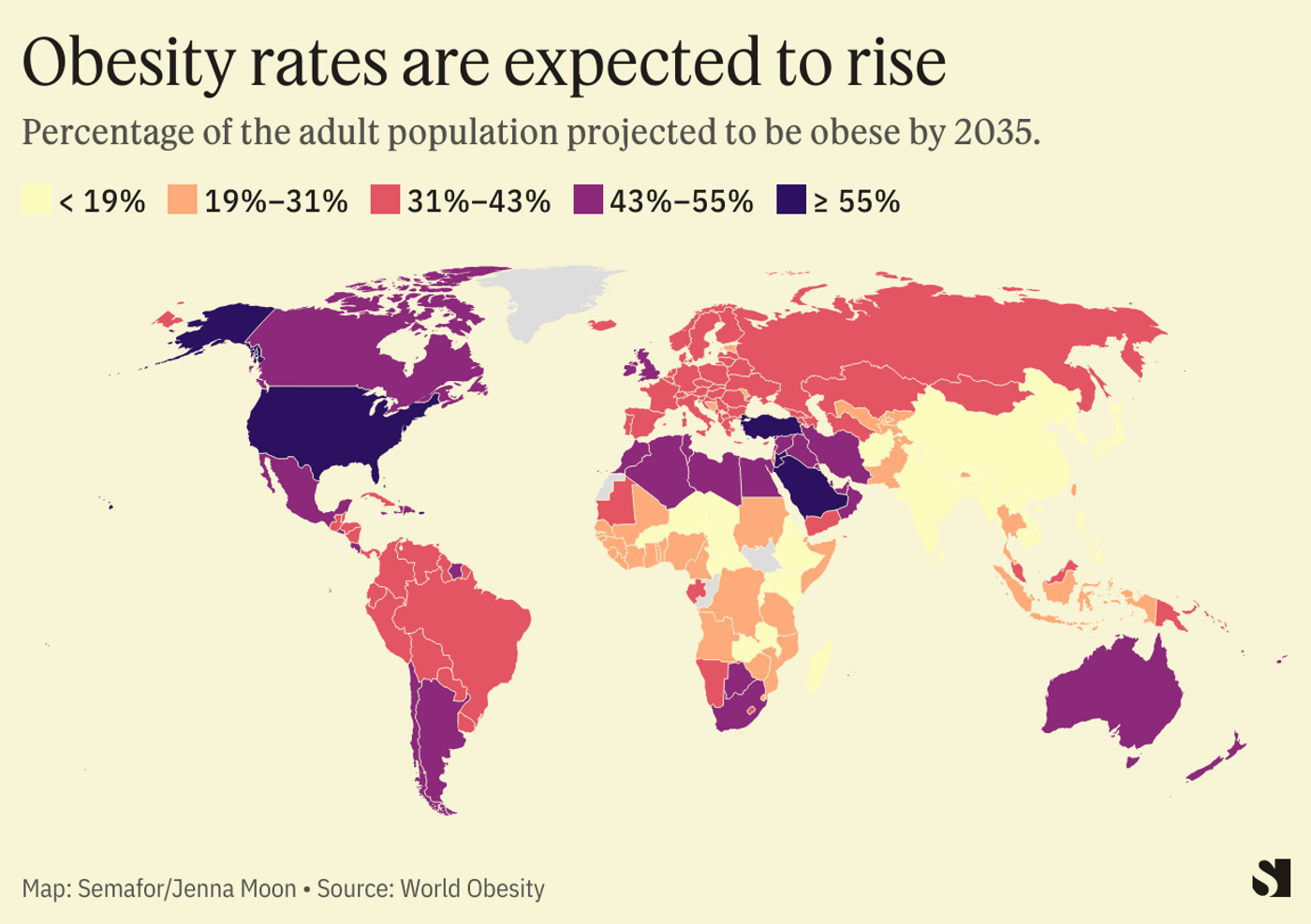
Countries in the Pacific Islands, such as American Samoa, Tonga, and Nauru, have some of the highest obesity rates in the world, with well over half of adults classified as obese. In contrast, many countries in East and Southeast Asia, such as Japan and Vietnam, have much lower obesity rates. High-income countries like the United States, Canada, and the United Kingdom tend to have higher obesity rates than many low-income countries, although this gap is changing over time. The map below shows some of the details by country.
Several factors help explain these differences. In wealthier countries, people often have easier access to processed foods that are high in sugar and fat, and many jobs involve sitting for long periods. In some developing countries, obesity used to be more common among wealthier people, but it is now increasing among poorer populations as diets and lifestyles change.
Overall, obesity is a global problem, but it looks different from country to country. Understanding these differences can help governments and communities create better plans to improve health and prevent obesity in the future.
 The Global Pulse