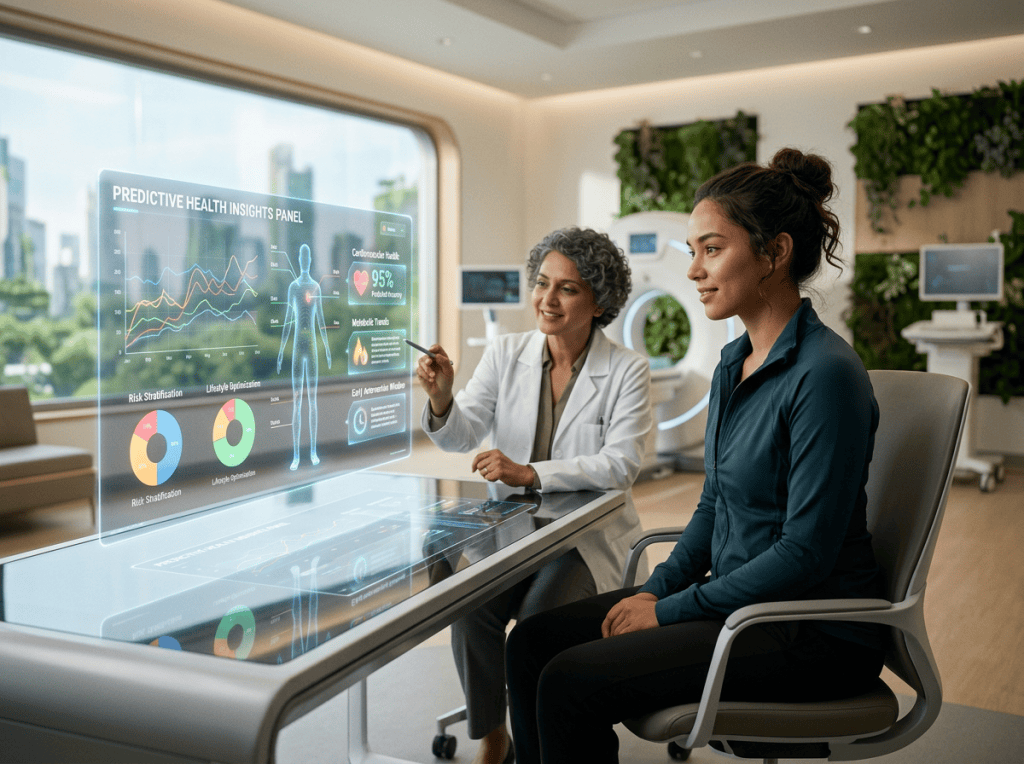
Most of us think about medicine as something we need when we get sick. We develop symptoms and end up going to a doctor hoping to receive a diagnosis and treatment. But what if health care could do a better job of identifying problems before someone actually gets sick?
This idea is part of what interests me about predictive health and the work of Dr. Michelle Lampl at Emory University. Dr. Lampl is co-director of Emory’s Predictive Health Institute and director of the Center for the Study of Human Health. She has researched human growth and development, including how nutrition, hormones, immune function, behavior, genetics and the environment interact during growth.
The interesting part to me is the larger idea behind the research she does, because health isn’t just the not being sick. There are biological and environmental changes happening throughout our lives, and understanding those changes can help us recognize risks sooner.
Dr. Lampl’s research on growth is a good example. Her work challenged the assumption that children grow continuously, and she was able to demonstrate that growth can actually happen in short bursts. Other research from her group examined relationships between growth and factors like sleep, weight gain and body composition.
Predictive health connects closely with public health, which my blog talks a lot about. Instead of waiting until large numbers of people develop preventable diseases, public health tries to identify risks and stop them from happening earlier. This could involve nutrition, exercise, environmental exposures, access to health care or many other factors. I’ve talked about a lot of these in past blogs.
This is the direction of medicine that interests me most. I want to learn how we can use science not only to treat disease, but also to understand health well enough to prevent disease when possible.
Learning about researchers like Dr. Lampl makes me interested in Emory because her work includes many areas like medicine, anthropology, biology and public health. Those connections are exactly what make human health such an interesting field to me.

