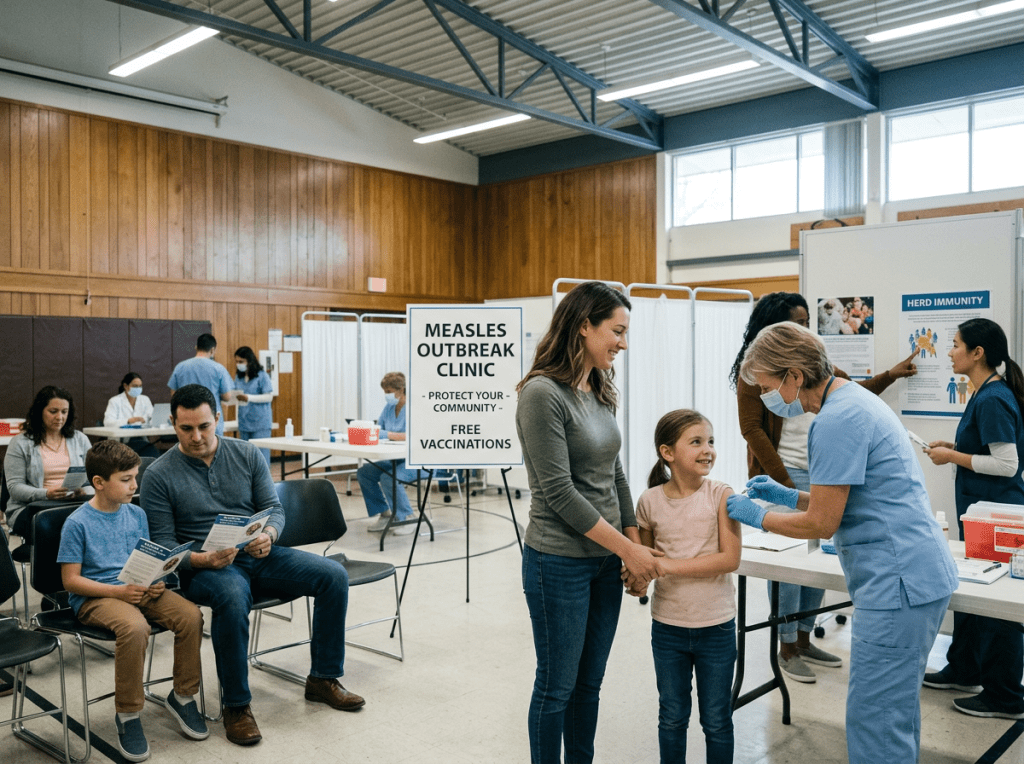
According to the CDC, the US had more than 2,200 measles cases in 2025, the worst it’s been in decades, and there were deaths, all in people who weren’t vaccinated. Vaccination coverage among kindergartners dropped from about 95% a few years ago to around 92.5%, which left roughly 286,000 little kids unprotected. That little gap matters more than it sounds.
This is where a concept called herd immunity comes in. Measles is one of the most contagious diseases on the planet. One sick person can infect 12 to 18 other people. The only way to stop it is for almost everybody to be covered, because that protects the people who can’t get vaccinated, like newborns and kids going through cancer treatment. The CDC says you need over 95% of a community vaccinated for that wall to hold. Drop below that and gaps becomes bigger.
The good news is the MMR vaccine is about 97% effective with two doses. The tool works, so we just have to use it.
Volunteering in a hospital made this real for me, because I’ve seen that the people at risk are usually the ones who can’t protect themselves. Herd immunity is how the rest of us cover for them.
Vaccines only work as a team. and people need to show up.

