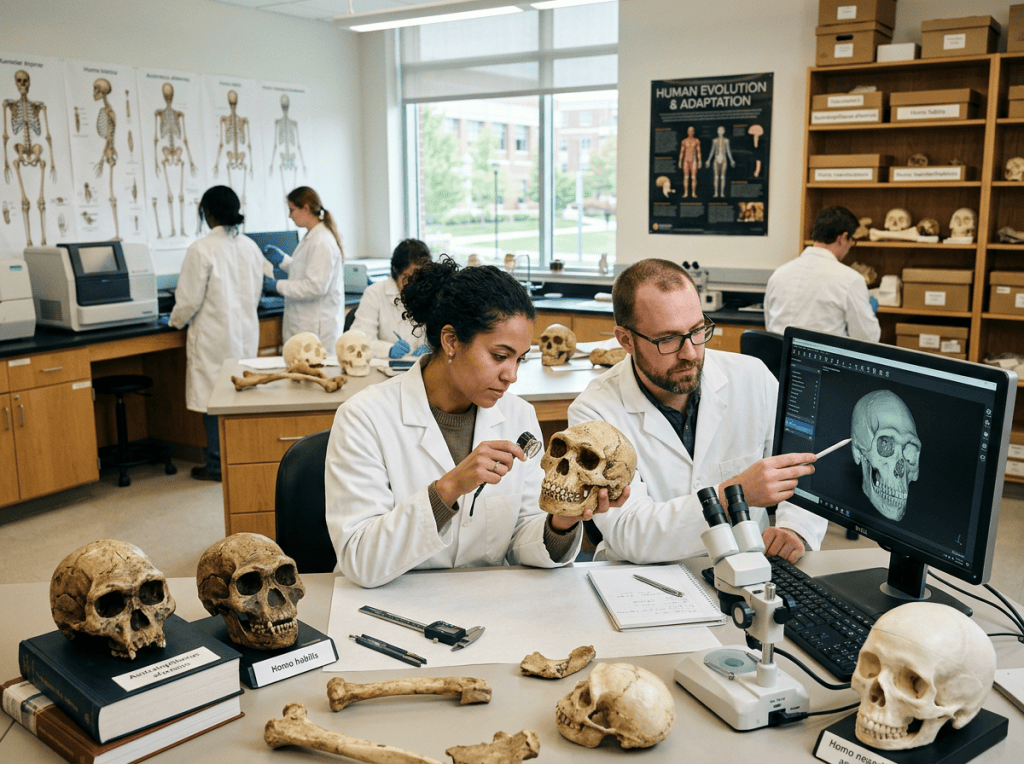
When most people think getting a bachelor’s degree before going to medical school, they probably think about biology and chemistry. I have always been interested in those subjects, but I am also interested in understanding why health and disease can look so different between different people.
That is why I was really interested when I found out about Emory University’s Anthropology and Human Biology undergraduate program. The major combines human biology with anthropology to study how evolution, culture, behavior, and the environment can influence human health. Emory describes the program as a path for pre-med students and others interested in STEM careers.
Students still take traditional science courses such as biology and chemistry, but they also study evolution and behavior, cultural anthropology, social science and medicine. The program also teaches students about human biological variation and how evolutionary processes can influence anatomy, physiology, behavior, and disease.
This degree really connects medicine with public and global health, which are areas I am really passionate about. A disease is biological, but someone’s health can also be affected by their culture, environment, resources, and experiences.
As someone who hopes to go to medical school, I don’t want to just learn how the human body works. I want to understand the person behind the disease. I think studying both anthropology and human biology could give me a much better perspective on what it actually means to improve human health.

